
Collected observations from settlement residents. Kept in waterproof bags in the longhouse. Some are useful. Some are just people processing things. Both matter.
On the Bears — Dale, Day 203
People keep saying we need to learn to “coexist with the bears.” I want to be clear about something: the bears are not coexisting with us. The bears are tolerating us. There is a significant difference. We are guests in a house where the landlord weighs 800 pounds and has never heard of a lease agreement.
The brown bear that Linda has named “Commissioner” (against my explicit objection that we should not be naming things that can kill us) came through camp again last night. Ate what was left of the drying rack salmon. Nobody stopped him. You don’t stop the Commissioner. The Commissioner stops when the Commissioner is finished.
I have started keeping a separate, smaller fish cache that I have told no one about. This is not hoarding. This is risk management. There is a difference, and I will die on this hill, possibly literally, if the Commissioner finds it.
On Rain — Sarah Peterson, Day 456
It has rained for nineteen consecutive days. I know this because I have been counting. Everyone tells me to stop counting. I will not stop counting.
Before The Correction, I lived in Tucson. Annual rainfall: 12 inches. Heceta Island annual rainfall: somewhere between 80 and 220 inches depending on who you ask, and everyone you ask will say it while smiling, which is unnerving.
My guitar has warped. My shoes have not been dry since March. My shelter leaks in three places that I have fixed and one place I cannot find, which I believe the shelter creates out of spite each time I fix the others.
Dr. Tanaka says the Tlingit word for this kind of rain translates roughly to “the rain that stays.” I asked her what the word for rain that leaves is. She looked at me for a very long time and then walked away. I think that was the answer.
On the Forest — Monk, Day 12
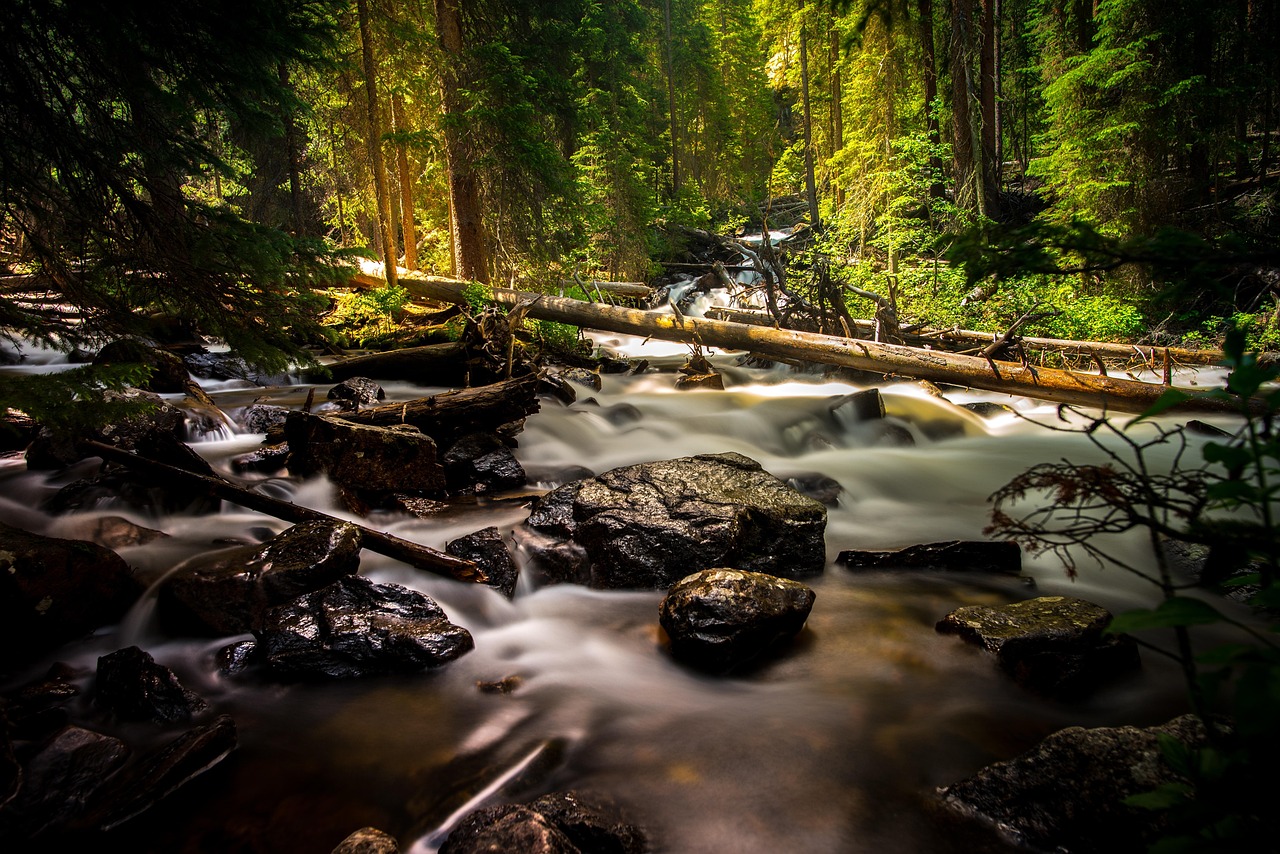
The trees here are alive in a way I didn’t understand trees could be alive. I spent fourteen years writing code — building systems that processed information, connected nodes, optimized pathways. I thought that was complex.
A single Sitka spruce in this forest is connected to every other tree through a mycorrhizal network that transfers nutrients, chemical signals, and — if you believe certain papers Dr. Tanaka has shown me — something that functions like memory. The forest is running its own distributed system. It has been running for thousands of years. It has never crashed. It does not need updates.
I keep staring at the trees because I’m trying to understand an architecture that makes everything I ever built look like a child’s toy. Greg thinks I’m having a breakdown. I’m having the opposite of a breakdown. I just don’t know what the word for that is yet.
On Fishing — Greg Huang, Day 589
Before I got here I had been fishing once. I was seven. My dad took me to a stocked pond in New Jersey where they basically threw the trout at you. I caught two. I thought I was a natural.
I have now spent approximately 400 days learning to fish in Southeast Alaska and I want to state for the record: I am not a natural. The fish here are not thrown at you. The fish here are engaged in a sophisticated campaign of psychological warfare and they are winning.
The thing nobody tells you about salmon fishing is that the salmon know. They know the current, they know the tide, they know the temperature of the water at every depth, and they know — I’m convinced of this — that you are specifically the one trying to catch them. They remember your face. They tell each other.
Meanwhile: Jim Taggart, who arrived from Craig with actual knowledge, catches fish while barely paying attention. He does it the way the people here have done it for eight thousand years — with patience, observation, and a complete absence of the panic that I bring to every interaction with marine life. I asked him once what his secret was. He said “stop trying.” This is either profound wisdom or he’s messing with me. Both seem equally likely.
On Medicine — Dr. Yuki Tanaka, Day 731
I am a marine biologist. I want to be very clear about this. My doctorate is in nearshore marine ecology with a focus on intertidal gastropod communities. I am the world’s foremost expert on a specific species of sea snail that lives in the Alexander Archipelago.
I am now the settlement’s doctor.
This is because I am the only person here who understands the scientific method, can read a medical textbook, and does not faint at the sight of blood. The bar was not high. The bar was on the ground. I stepped over it and now people come to me with rashes.
I have successfully treated: two broken fingers (splinted), one case of giardia (boiled water — I cannot believe I had to explain this), approximately forty cases of “I think this berry might be poisonous” (it was, twice), and one truly impressive allergic reaction to devil’s club that I handled by reading a book while the patient screamed.
What keeps me up at night is not what I’ve treated. It’s what I can’t treat. We have no antibiotics. No surgical capability. No imaging. If someone develops appendicitis, I will be standing there with a marine biology degree and a very sincere expression and that person will die. This is the reality we live in, and every time someone asks me to look at their weird mole I think about it.
The Tlingit had extensive medicinal plant knowledge — devil’s club inner bark for infections, Labrador tea, yarrow, Hudson Bay tea. I’m learning. I’m cataloguing. I’m testing things the way a scientist should. But I want the record to show: I am a sea snail expert who is doing her best, and her best is not enough, and she knows it.
On the Kids — Tom Kowalski, Day 400
My 14-year-old, Maya, hasn’t complained once. Not once. She helped build our shelter. She learned to smoke fish faster than I did. She made friends with Elena’s kid within an hour of Elena arriving. She is adapting to post-collapse life better than any adult on this island, and it terrifies me.
It terrifies me because she doesn’t miss it. She doesn’t miss school, or the internet, or the mall, or any of it. She told me last week that she feels “more real” here. She said that. She’s fourteen. She shouldn’t have to feel more real. She should have been real the whole time. What were we doing to our kids that a 14-year-old feels more alive gutting fish on a rainforest island than she did in her own bedroom?
The little ones — my twins, age 8, and the Petersen kid, age 6 — they play in the forest like kids have played in forests for a hundred thousand years. They build things. They watch animals. They come home covered in mud and smelling like cedar and they are radiantly, ferociously happy in a way they never were when they had toys.
I used to work 60 hours a week to give my kids everything. Turns out everything was the wrong thing and nothing was what they needed. That’s the kind of realization that can break you if you let it, so I have decided not to let it, and instead I am teaching my 8-year-olds to identify edible mushrooms, which feels more useful than anything I did in my previous career in marketing.
On Stars — Bev, Day 600
Can’t sleep most nights. Dale snores. Always has. Used to not matter — you’d put in earplugs, turn on a fan, whatever. Now there’s no fan and the earplugs got used for something else months ago. So I go outside.
The stars here are stupid. I mean that as a compliment. They’re so thick and bright that it looks fake, like a movie set where the art department went overboard. You can see the Milky Way like a smear of chalk across the whole sky. In Portland, you could see maybe thirty stars on a good night. Here there are thousands. Millions. The actual, real number of stars that exist, just right there, like they’ve been waiting for you to turn the lights off.
I think about all the years we lit up the cities so bright we couldn’t see what was above us. All those people, all that electricity, all that effort to not be in the dark, and the cost was we couldn’t see the sky. That seems like it means something. I’m not sure what. I’m not the philosopher in this settlement. I’m the one who makes sure Dale doesn’t start a trade war with Craig over fishing rights he invented.
But I stand out there at 2 AM, and the sky is impossibly full, and the ocean is black, and the spruce trees are just shapes against the stars, and I think: oh. This is what it was always supposed to look like. We just forgot.
Additional field notes are archived in the longhouse. If you have observations to contribute, leave them with Marcus, who will add them to the collection after removing any profanity, per Council resolution 2028-014 (passed 5-1, the one being Dale, who argued profanity was “the only honest language left”).