
A practical guide to what you can eat on Heceta Island, how to get it, and how not to die in the process. Maintained by Dr. Yuki Tanaka and the Foraging & Harvest Committee.
Guiding Principle
If you are not 100% certain something is safe to eat, do not eat it. Bring it to Dr. Tanaka or a senior forager. The forest is generous, but it does not suffer fools. Devil’s club looks like it might be useful. It is, in some traditions, medicinally — but if you grab it without knowing what you’re doing, you’ll spend three days pulling barbed spines out of your palms. The red baneberry is beautiful. It will stop your heart. Learn the difference between a huckleberry and a baneberry before you put anything in your mouth.
This guide is organized by season because that’s how food works here. There is no “year-round” section because nothing is year-round. That’s the first lesson.
Spring (March – May)
Plants
Fiddlehead ferns — Harvest the tightly curled fronds of lady ferns in early spring. Boil before eating. These are one of the first fresh greens available after winter and they taste like hope.
Beach asparagus (glasswort/sea beans) — Found in upper tidal zones. Salty, crunchy, edible raw or blanched. One of the few things that tastes good without processing.
Spruce tips — The bright green new growth on Sitka spruce branches. High in vitamin C. Can be eaten raw, brewed into tea, or infused into vinegar if you have any. The Tlingit used these extensively. They were right.
Stinging nettle — Wear gloves. Boil thoroughly. Rich in iron and vitamins. The sting disappears when cooked. If you skip the gloves, you will regret it for exactly the amount of time it takes to find gloves.
Marine
Herring — Pacific herring spawn in spring. Historically, this was one of the most important food events for Tlingit communities. Herring eggs on kelp (traditionally harvested by submerging hemlock branches in spawning areas) are nutritionally dense and can be dried for storage. We learned this technique in Year One and it changed our spring food security entirely.
Clams and cockles — Spring low tides expose productive clam beds. Butter clams, littleneck clams, and cockles are abundant. CRITICAL: Check the posted PSP (paralytic shellfish poisoning) advisories. We cannot test for biotoxins. When in doubt, don’t harvest. This is one of the few things on this island that can kill you faster than a bear.
Summer (June – August)
Fish
King (chinook) salmon — First of the five species to run, beginning in late May/early June. The largest and fattiest. Every king caught is a gift. Treat it accordingly.
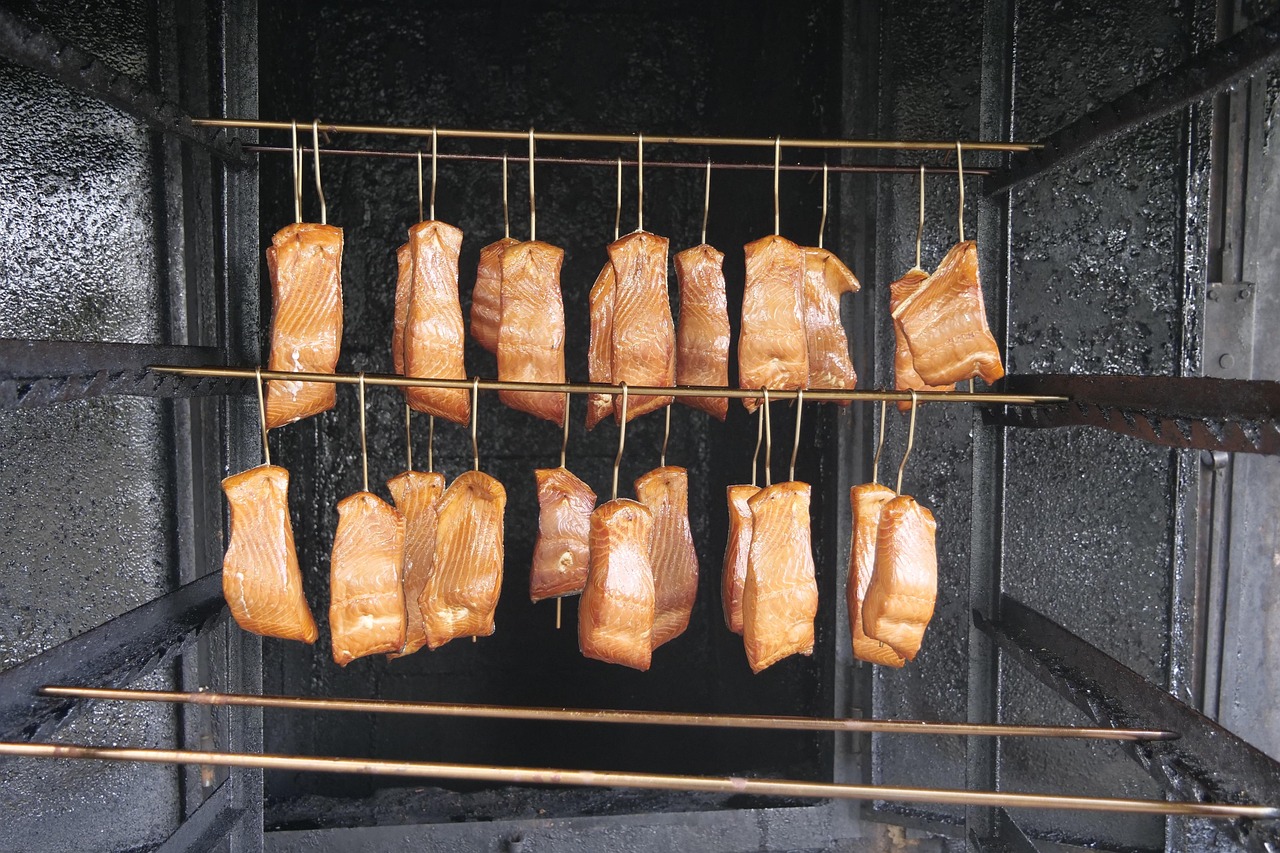
Sockeye (red) salmon — Mid-summer run. Deep red flesh, high oil content. Smokes beautifully. This is the backbone of our winter stores.
Pink (humpy) salmon — The most abundant species, running in enormous numbers in odd-numbered years. Lower oil content than sockeye but perfectly good food. Anyone who complains about pink salmon has not been here long enough.
Plants
Salmonberries — Ripen June through July. Orange to deep red. Sweet and fragile — eat fresh, they don’t store well.
Blueberries — Wild Alaskan blueberries are smaller and more intensely flavored than anything you’ve had before. Ripen mid to late summer. Can be dried for winter. Pick more than you think you need.
Thimbleberries — Soft, red, delicate. Eat immediately. They disintegrate if you look at them wrong.
Game
Deer — Sitka black-tailed deer are present year-round but summer is not primary hunting season (they’re in the alpine, harder to reach, and we’re busy with fish). Limited hunting by Council authorization only.
Autumn (September – November)
Fish
Coho (silver) salmon — The autumn run. Excellent fresh and smoked. This is the last major protein harvest before winter and it determines how comfortable December will be.
Chum (dog) salmon — Late run. Lower quality flesh but perfectly edible smoked or dried. The name “dog salmon” refers to the traditional practice of feeding it to sled dogs. We don’t have sled dogs. We eat it and are thankful.
Game
Deer — Primary hunting season. Bucks move to lower elevations in autumn. Hunting parties operate under Council quota. Every part of the animal is used: meat, hide, sinew, bone. Waste is not tolerated. The Tlingit approach to deer — gratitude, full utilization, population management — is our model. It works.
Plants
Huckleberries — Late-season berries that can be harvested into October. Tart, rich in vitamins. Dry well for winter storage.
Highbush cranberries — Tart and slightly bitter. Better after the first frost. Good for preserves if you have sugar (you probably don’t; they’re still good).
Mushrooms — EXTREME CAUTION. Some mushrooms on this island are excellent food (chanterelles, boletes). Others will kill you painfully. Do not harvest mushrooms without direct supervision from a trained forager. This is not a suggestion. This is a rule. We lost no one to mushrooms and we intend to keep it that way.
Winter (December – February)
Winter is when you eat what you preserved. If you worked hard in summer and autumn, winter is lean but survivable. If you didn’t, winter is a lesson you won’t forget.
Smoked and dried salmon — The primary winter food source. Properly processed salmon keeps for months. Improperly processed salmon is a medical emergency. Learn the difference.
Dried berries and seaweed — Supplementary nutrition. Dried bull kelp is high in iodine and minerals.
Shellfish — Limited winter harvest depending on weather and tides. Storm surge makes tidal harvesting dangerous November through February. Don’t risk your life for clams.
Deer (stored) — Smoked venison jerky from the autumn hunt.
Spruce needle tea — Vitamin C. Drink it daily. Scurvy is a real threat in winter and it is entirely preventable.
“The island feeds us. Not generously, not easily, but consistently — if we pay attention.”
— Dr. Yuki Tanaka, The Larder, First Edition